
 cn.
cn. en.
en.


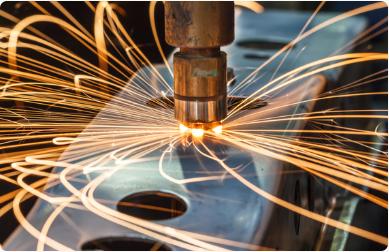
With the rapid development of 5G, artificial intelligence, Internet of Things and other technologies, intelligent manufacturing has ushered in a vigorous development, and a large number of incubated industrial parks have been born in various regions. According to the World Intelligent Manufacturing Center Development Trend Report (2019), there were 537 industrial parks with the name of "intelligent manufacturing" in China in early 2019, distributed in 27 provinces and cities nationwide.
When intelligent technology began to be accepted by more and more employees of manufacturing enterprises and became the core driving force of "Made in China 2020", it pressed the pause button because of a sudden COVID-19.
Of course, this also gives us a chance to think calmly, to question what empowerment intelligent technology has brought to the manufacturing industry chain and how it should be rooted in the assembly line.
We have reason to believe that every resumption is to accumulate strength for the next gallop.
It will be even more difficult to resume production, and the "second pass" of manufacturing industry in 2020
If the COVID-19 is the first difficulty that China will encounter in 2020, the resumption of production will become the second difficulty that business owners have to face.
For manufacturing enterprises that are indispensable to real assets, rent, labor, energy, orders... are all big mountains on their heads.
The only way to solve the problem is to return to work. But how difficult it is to return to work and production.
The first is the objective limitation. The COVID-19 has a wide range of impacts. The measures of "closing down cities" and "restricting traffic" in various places have brought considerable difficulties for people to return to the factory after the festival. Many people are unwilling to return to their jobs too early in view of safety factors. Those who have returned also need to be isolated as required, and their work is delayed.
In addition, the whole society is faced with the problem of shortage of protective materials, and the manufacturing industry is more labor-intensive. Once the enterprises do not take comprehensive protective measures, there may be a risk of the epidemic spreading again after the resumption of work.
Moreover, even if the epidemic prevention work is in place, the cooperation of the entire industrial chain is required to effectively resume work. In particular, each link of modern manufacturing is closely linked. For example, the slowdown of raw material production will directly lead to the overall decline of the middle and lower reaches.
According to Gartner, an international research organization, the uncertainty of the epidemic situation directly led to the shortage of labor in semiconductor factories, which decreased by at least 20%. How to do a good job in production after the resumption of work has also become a difficult problem to test the enterprise this spring.
How can manufacturing enterprises find a breakthrough in both epidemic prevention and development?
It sounds that the intelligent factory with high automation rate seems to be the perfect answer to the shortage of labor and production with few people.
To understand today's intelligent manufacturing, we need to understand two key links:
1. Intelligent factory. In short, it refers to the plant system and equipment and facilities for highly automated production by using many intelligent means;
2. Intelligent production. It refers to the advanced production mode supported by highly intelligent information management network and software and hardware systems, including order scheduling, production management, warehousing and logistics, assembly testing, quality inspection and human-computer interaction in the entire manufacturing process.
It's hard to see the leopard in the pipe, so we decided to carry out a "manufacturing enterprise production line cloud tourism" to lead you to comprehensively understand the story behind the manufacturing enterprise. We have selected an enterprise, Zhongke Dawning, which resumed production far earlier than the time specified by the government for resumption of work, to explore the details of the production line in terms of intelligence, manufacturing and epidemic.
On the one hand, as a high-tech enterprise, Zhongke Shuguang has invested a lot of resources and research forces in intelligent factories. At present, its Tianjin factory has formed a relatively mature intelligent production system.
In addition, at the peak of the epidemic, when the mobility of personnel was strictly restricted, the first batch of IT equipment, such as hundreds of high-quality servers, which were manufactured by Zhongke Dawning, resumed their work because of the needs of the epidemic prevention front line, has been sent to the front line of the epidemic area at a high speed, and their resumption strategy is more instructive.
In general, the deep integration of intelligent technology and manufacturing has released at least three values:
1. It directly alleviates the efficiency climbing problem caused by personnel shortage.
Intelligentization has enabled Zhongke Dawning to complete the online operation of some types of work from the process very early, such as using virtual digital factory and process simulation technology to optimize factory planning, process arrangement, production arrangement, etc. This allows some employees to complete relevant work at home and keep up with business needs even if they cannot return to work in time.
In the production line indispensable to employees, the number of front-line workers required by intelligent factories is more than half that of traditional factories under the same output. The production efficiency of the same worker should be more than 3 times, which to some extent offset the capacity problems caused by the delayed resumption of work.
Take the server, one of the key products of Shuguang Company, as an example. The assembly of hard disk and hard disk rack used to be done manually. On average, more than 10 people were required to cooperate every day to ensure the production capacity. However, after the hard disk assembly line is changed into an automated robot production line, the combination and screwing processes are replaced by machines, which greatly saves labor.
According to Dawning staff, in order to supply the demand of the epidemic fighting frontline during the epidemic, their automated production lines are all continuous 24 hours, which is obviously beyond the reach of manpower with the same cost.
2. Ensure the health of personnel, reduce the risk of cross infection, and achieve safe resumption of work.
The premise of resuming production is naturally the life safety of employees. How to reduce the communication between personnel and ensure the orderly production. Emancipation of manpower and efficient management are essential.
In Dawning Tianjin Factory, we saw a series of automatic equipment. In the warehousing and logistics link, there are automatic case folding machines, automatic labeling machines, electronic sorting equipment, automatic sealing machines, automatic strapping machines, suction and hoisting equipment, etc., and only one employee is operating to avoid cross infection to the greatest extent.
To make these machines communicate with each other, information systems are essential. From Dawning Intelligent Factory, we know that they all use interconnected wired or wireless communication, advanced order scheduling and manufacturing management software and big data analysis platform for collaboration, so that employees can also achieve efficient management of the factory through remote office, and can ensure that the chain will not fall in case of epidemic or other special circumstances.
3. Improve production yield and realize lean management.
Through the above measures, the impact of the epidemic has been greatly reduced, but the development of enterprises obviously needs to be supported by sufficient profit margins and growth space. This puts forward stricter requirements for product quality and management system.
We know that ICT industry often has high product precision, complex production process, and more cautious testing. For example, the inspection method of the memory modules used in the Zhongke Dawning Server is to manually load materials and test them on the memory test tooling. Taking a group of 4pcs as an example, the test time of a group is more than 5 minutes, and a test fixture can test less than 400pcs of memory in a day. The current test methods obviously cannot meet the requirements of server manufacturing, and the efficiency is low.
Through intelligent memory detection equipment, Zhongke Dawning can achieve efficient and highly automated detection, eliminate human errors, and thus ensure product quality and business reputation.
Of course, the strict demands of all parties naturally require a "supervisor" to ensure the best balance between efficiency and quality, so as to prevent unnecessary downtime losses caused by a link breakage. So in Dawning Intelligent Factory, we can see that the management system using advanced digital manufacturing platform can monitor and manage the overall operation of the factory in real time.
The efficient integration of enterprise resource planning (ERP), product lifecycle management (PLM) and manufacturing execution system (MES) breaks the information island and realizes the interconnection between information flow and data flow. Even if you are not on the front line, you can know everything from design to manufacturing.
It can be said that high-performance computing hardware, integrated AI solutions, and powerful cloud brain have finally combined to produce the resume time. This may also explain why intelligent manufacturing is crucial for enterprises to resume their work, and why Sunrise regards it as the key support for its own development.
See opportunities in danger, intelligent manufacturing press the accelerator key for industry
In the Chinese context, intelligent manufacturing has always been a very broad concept of technology and industry. There are always different opinions on how high is intelligence and which manufacturing enterprises should join this camp.
However, an epidemic has made most business owners and managers realize that today's ultimate control and future intelligent management are folded in the same time and space as the short-term shortage and long-term understaffing.
After this battle, it may give the next practical definition of intelligent manufacturing. We believe that it should at least include the following features:
1. People, machines and other means of production can communicate and cooperate naturally and in real time in a network;
2. The production management system can actively complete some tasks of innovation, decision-making and value-added;
3 Employees can better balance life (special circumstances) and work, and perform tasks efficiently and humanely.
Obviously, the answer to the above question is reflected behind the question of returning to work. The real base of intelligent manufacturing also began to emerge from the various opinions.
To access it, the manufacturing industry may need to cross three thresholds:
1. Information infrastructure.
Intelligent manufacturing requires a lot of data computing capacity, storage space, servers, big data analysis capabilities, etc. The traditional computing cluster architecture is obviously not enough to support.
2. Information security.
With the informatization process of the factory, intelligent IT equipment will also carry more private information involving trade secrets. Keeping data sovereignty, data property rights, data privacy protection, etc. in the domestic intellectual property infrastructure may be one of the hedging strategies to deal with the unclear international situation.
3. Cost of industrial upgrading.
If you want to transplant intelligent technology to your own business, the high investment of technical talents and learning threshold will persuade many enterprises and organizations to leave. More and more large scale service providers (HSPs), cloud infrastructure and digital service providers have started to create an integrated industry solution of "computing power+algorithm" to help the manufacturing industry upgrade.
Take one outline and ten thousand eyes, solve one volume and many articles are clear.
The change of Zhongke Dawning witnessed the self iteration and subversive evolution of the ICT industry, directly promoted the overall strength of the industry, and became the mainstay of the front line at a critical moment.
Intelligent manufacturing is not so much a new mode of production and manufacturing as a dynamic management that integrates product development, production, market, operation and other stages. Only on such a strong base can China's manufacturing industry corps have more confidence and be fearless of all possible "black swans" in the future.
In the past year, the combination of intelligent technology and real industry is bringing about earth shaking changes to thousands of people.
Among them, the industrial field cannot be ignored.
With the rapid development of 5G, artificial intelligence, Internet of Things and other technologies, intelligent manufacturing has ushered in a vigorous development, and a large number of incubated industrial parks have been born in various regions. According to the World Intelligent Manufacturing Center Development Trend Report (2019), there were 537 industrial parks with the name of "intelligent manufacturing" in China in early 2019, distributed in 27 provinces and cities nationwide.
When intelligent technology began to be accepted by more and more employees of manufacturing enterprises and became the core driving force of "Made in China 2025", the pause button was pressed due to a sudden COVID-19.
Of course, this also gives us a chance to think calmly, to question what empowerment intelligent technology has brought to the manufacturing industry chain and how it should be rooted in the assembly line.
We have reason to believe that every resumption is to accumulate strength for the next gallop.
It will be even more difficult to resume production, and the "second pass" of manufacturing industry in 2020
If the COVID-19 is the first difficulty that China will encounter in 2020, the resumption of production will become the second difficulty that business owners have to face.
For manufacturing enterprises that are indispensable to real assets, rent, labor, energy, orders... are all big mountains on their heads.
The only way to solve the problem is to return to work. But how difficult it is to return to work and production.
The first is the objective limitation. The COVID-19 has a wide range of impacts. The measures of "closing down cities" and "restricting traffic" in various places have brought considerable difficulties for people to return to the factory after the festival. Many people are unwilling to return to their jobs too early in view of safety factors. Those who have returned also need to be isolated as required, and their work is delayed.
In addition, the whole society is faced with the problem of shortage of protective materials, and the manufacturing industry is more labor-intensive. Once the enterprises do not take comprehensive protective measures, there may be a risk of the epidemic spreading again after the resumption of work.
Moreover, even if the epidemic prevention work is in place, the cooperation of the entire industrial chain is required to effectively resume work. In particular, each link of modern manufacturing is closely linked. For example, the slowdown of raw material production will directly lead to the overall decline of the middle and lower reaches.
According to Gartner, an international research organization, the uncertainty of the epidemic situation directly led to the shortage of labor in semiconductor factories, which decreased by at least 20%. How to do a good job in production after the resumption of work has also become a difficult problem to test the enterprise this spring.
How can manufacturing enterprises find a breakthrough in both epidemic prevention and development?
It sounds that the intelligent factory with high automation rate seems to be the perfect answer to the shortage of labor and production with few people.
To understand today's intelligent manufacturing, we need to understand two key links:
1. Intelligent factory. In short, it refers to the plant system and equipment and facilities for highly automated production by using many intelligent means;
2. Intelligent production. It refers to the advanced production mode supported by highly intelligent information management network and software and hardware systems, including order scheduling, production management, warehousing and logistics, assembly testing, quality inspection and human-computer interaction in the entire manufacturing process.
It's hard to see the leopard in the pipe, so we decided to carry out a "manufacturing enterprise production line cloud tourism" to lead you to comprehensively understand the story behind the manufacturing enterprise. We have selected an enterprise, Zhongke Dawning, which resumed production far earlier than the time specified by the government for resumption of work, to explore the details of the production line in terms of intelligence, manufacturing and epidemic.
On the one hand, as a high-tech enterprise, Zhongke Shuguang has invested a lot of resources and research forces in intelligent factories. At present, its Tianjin factory has formed a relatively mature intelligent production system.
In addition, at the peak of the epidemic, when the mobility of personnel was strictly restricted, the first batch of IT equipment, such as hundreds of high-quality servers, which were manufactured by Zhongke Dawning, resumed their work because of the needs of the epidemic prevention front line, has been sent to the front line of the epidemic area at a high speed, and their resumption strategy is more instructive.
In general, the deep integration of intelligent technology and manufacturing has released at least three values:
1. It directly alleviates the efficiency climbing problem caused by personnel shortage.
Intelligentization has enabled Zhongke Dawning to complete the online operation of some types of work from the process very early, such as using virtual digital factory and process simulation technology to optimize factory planning, process arrangement, production arrangement, etc. This allows some employees to complete relevant work at home and keep up with business needs even if they cannot return to work in time.
In the production line indispensable to employees, the number of front-line workers required by intelligent factories is more than half that of traditional factories under the same output. The production efficiency of the same worker should be more than 3 times, which to some extent offset the capacity problems caused by the delayed resumption of work.
Take the server, one of the key products of Shuguang Company, as an example. The assembly of hard disk and hard disk rack used to be done manually. On average, more than 10 people were required to cooperate every day to ensure the production capacity. However, after the hard disk assembly line is changed into an automated robot production line, the combination and screwing processes are replaced by machines, which greatly saves labor.
According to Dawning staff, in order to supply the demand of the epidemic fighting frontline during the epidemic, their automated production lines are all continuous 24 hours, which is obviously beyond the reach of manpower with the same cost.
2. Ensure the health of personnel, reduce the risk of cross infection, and achieve safe resumption of work.
The premise of resuming production is naturally the life safety of employees. How to reduce the communication between personnel and ensure the orderly production. Emancipation of manpower and efficient management are essential.
In Dawning Tianjin Factory, we saw a series of automatic equipment. In the warehousing and logistics link, there are automatic case folding machines, automatic labeling machines, electronic sorting equipment, automatic sealing machines, automatic strapping machines, suction and hoisting equipment, etc., and only one employee is operating to avoid cross infection to the greatest extent.
To make these machines communicate with each other, information systems are essential. From Dawning Intelligent Factory, we know that they all use interconnected wired or wireless communication, advanced order scheduling and manufacturing management software and big data analysis platform for collaboration, so that employees can also achieve efficient management of the factory through remote office, and can ensure that the chain will not fall in case of epidemic or other special circumstances.
3. Improve production yield and realize lean management.
Through the above measures, the impact of the epidemic has been greatly reduced, but the development of enterprises obviously needs to be supported by sufficient profit margins and growth space. This puts forward stricter requirements for product quality and management system.
We know that ICT industry often has high product precision, complex production process, and more cautious testing. For example, the inspection method of the memory modules used in the Zhongke Dawning Server is to manually load materials and test them on the memory test tooling. Taking a group of 4pcs as an example, the test time of a group is more than 5 minutes, and a test fixture can test less than 400pcs of memory in a day. The current test methods obviously cannot meet the requirements of server manufacturing, and the efficiency is low.
Through intelligent memory detection equipment, Zhongke Dawning can achieve efficient and highly automated detection, eliminate human errors, and thus ensure product quality and business reputation.
Of course, the strict demands of all parties naturally require a "supervisor" to ensure the best balance between efficiency and quality, so as to prevent unnecessary downtime losses caused by a link breakage. So in Dawning Intelligent Factory, we can see that the management system using advanced digital manufacturing platform can monitor and manage the overall operation of the factory in real time.
The efficient integration of enterprise resource planning (ERP), product lifecycle management (PLM) and manufacturing execution system (MES) breaks the information island and realizes the interconnection between information flow and data flow. Even if you are not on the front line, you can know everything from design to manufacturing.
It can be said that high-performance computing hardware, integrated AI solutions, and powerful cloud brain have finally combined to produce the resume time. This may also explain why intelligent manufacturing is crucial for enterprises to resume their work, and why Sunrise regards it as the key support for its own development.
See opportunities in danger, intelligent manufacturing press the accelerator key for industry
In the Chinese context, intelligent manufacturing has always been a very broad concept of technology and industry. There are always different opinions on how high is intelligence and which manufacturing enterprises should join this camp.
However, an epidemic has made most business owners and managers realize that today's ultimate control and future intelligent management are folded in the same time and space as the short-term shortage and long-term understaffing.
After this battle, it may give the next practical definition of intelligent manufacturing. We believe that it should at least include the following features:
1. People, machines and other means of production can communicate and cooperate naturally and in real time in a network;
2. The production management system can actively complete some tasks of innovation, decision-making and value-added;
3 Employees can better balance life (special circumstances) and work, and perform tasks efficiently and humanely.
Obviously, the answer to the above question is reflected behind the question of returning to work. The real base of intelligent manufacturing also began to emerge from the various opinions.
To access it, the manufacturing industry may need to cross three thresholds:
1. Information infrastructure.
Intelligent manufacturing requires a lot of data computing capacity, storage space, servers, big data analysis capabilities, etc. The traditional computing cluster architecture is obviously not enough to support.
2. Information security.
With the informatization process of the factory, intelligent IT equipment will also carry more private information involving trade secrets. Keeping data sovereignty, data property rights, data privacy protection, etc. in the domestic intellectual property infrastructure may be one of the hedging strategies to deal with the unclear international situation.
3. Cost of industrial upgrading.
If you want to transplant intelligent technology to your own business, the high investment of technical talents and learning threshold will persuade many enterprises and organizations to leave. More and more large scale service providers (HSPs), cloud infrastructure and digital service providers have started to create an integrated industry solution of "computing power+algorithm" to help the manufacturing industry upgrade.
Take one outline and ten thousand eyes, solve one volume and many articles are clear.
The change of Zhongke Dawning witnessed the self iteration and subversive evolution of the ICT industry, directly promoted the overall strength of the industry, and became the mainstay of the front line at a critical moment.
Intelligent manufacturing is not so much a new mode of production and manufacturing as a dynamic management that integrates product development, production, market, operation and other stages. Only on such a strong base can China's manufacturing industry corps have more confidence and be fearless of all possible "black swans" in the future.
In the past year, the combination of intelligent technology and real industry is bringing about earth shaking changes to thousands of people.
Among them, the industrial field cannot be ignored.
With the rapid development of 5G, artificial intelligence, Internet of Things and other technologies, intelligent manufacturing has ushered in a vigorous development, and a large number of incubated industrial parks have been born in various regions. According to the World Intelligent Manufacturing Center Development Trend Report (2019), there were 537 industrial parks with the name of "intelligent manufacturing" in China in early 2019, distributed in 27 provinces and cities nationwide.
When intelligent technology began to be accepted by more and more employees of manufacturing enterprises and became the core driving force of "Made in China 2025", the pause button was pressed due to a sudden COVID-19.
Of course, this also gives us a chance to think calmly, to question what empowerment intelligent technology has brought to the manufacturing industry chain and how it should be rooted in the assembly line.
We have reason to believe that every resumption is to accumulate strength for the next gallop.
It will be even more difficult to resume production, and the "second pass" of manufacturing industry in 2020
If the COVID-19 is the first difficulty that China will encounter in 2020, the resumption of production will become the second difficulty that business owners have to face.
For manufacturing enterprises that are indispensable to real assets, rent, labor, energy, orders... are all big mountains on their heads.
The only way to solve the problem is to return to work. But how difficult it is to return to work and production.
The first is the objective limitation. The COVID-19 has a wide range of impacts. The measures of "closing down cities" and "restricting traffic" in various places have brought considerable difficulties for people to return to the factory after the festival. Many people are unwilling to return to their jobs too early in view of safety factors. Those who have returned also need to be isolated as required, and their work is delayed.
In addition, the whole society is faced with the problem of shortage of protective materials, and the manufacturing industry is more labor-intensive. Once the enterprises do not take comprehensive protective measures, there may be a risk of the epidemic spreading again after the resumption of work.
Moreover, even if the epidemic prevention work is in place, the cooperation of the entire industrial chain is required to effectively resume work. In particular, each link of modern manufacturing is closely linked. For example, the slowdown of raw material production will directly lead to the overall decline of the middle and lower reaches.
According to Gartner, an international research organization, the uncertainty of the epidemic situation directly led to the shortage of labor in semiconductor factories, which decreased by at least 20%. How to do a good job in production after the resumption of work has also become a difficult problem to test the enterprise this spring.
How can manufacturing enterprises find a breakthrough in both epidemic prevention and development?
It sounds that the intelligent factory with high automation rate seems to be the perfect answer to the shortage of labor and production with few people.
To understand today's intelligent manufacturing, we need to understand two key links:
1. Intelligent factory. In short, it refers to the plant system and equipment and facilities for highly automated production by using many intelligent means;
2. Intelligent production. It refers to the advanced production mode supported by highly intelligent information management network and software and hardware systems, including order scheduling, production management, warehousing and logistics, assembly testing, quality inspection and human-computer interaction in the entire manufacturing process.
It's hard to see the leopard in the pipe, so we decided to carry out a "manufacturing enterprise production line cloud tourism" to lead you to comprehensively understand the story behind the manufacturing enterprise. We have selected an enterprise, Zhongke Dawning, which resumed production far earlier than the time specified by the government for resumption of work, to explore the details of the production line in terms of intelligence, manufacturing and epidemic.
On the one hand, as a high-tech enterprise, Zhongke Shuguang has invested a lot of resources and research forces in intelligent factories. At present, its Tianjin factory has formed a relatively mature intelligent production system.
In addition, at the peak of the epidemic, when the mobility of personnel was strictly restricted, the first batch of IT equipment, such as hundreds of high-quality servers, which were manufactured by Zhongke Dawning, resumed their work because of the needs of the epidemic prevention front line, has been sent to the front line of the epidemic area at a high speed, and their resumption strategy is more instructive.
In general, the deep integration of intelligent technology and manufacturing has released at least three values:
1. It directly alleviates the efficiency climbing problem caused by personnel shortage.
Intelligentization has enabled Zhongke Dawning to complete the online operation of some types of work from the process very early, such as using virtual digital factory and process simulation technology to optimize factory planning, process arrangement, production arrangement, etc. This allows some employees to complete relevant work at home and keep up with business needs even if they cannot return to work in time.
In the production line indispensable to employees, the number of front-line workers required by intelligent factories is more than half that of traditional factories under the same output. The production efficiency of the same worker should be more than 3 times, which to some extent offset the capacity problems caused by the delayed resumption of work.
Take the server, one of the key products of Shuguang Company, as an example. The assembly of hard disk and hard disk rack used to be done manually. On average, more than 10 people were required to cooperate every day to ensure the production capacity. However, after the hard disk assembly line is changed into an automated robot production line, the combination and screwing processes are replaced by machines, which greatly saves labor.
According to Dawning staff, in order to supply the demand of the epidemic fighting frontline during the epidemic, their automated production lines are all continuous 24 hours, which is obviously beyond the reach of manpower with the same cost.
2. Ensure the health of personnel, reduce the risk of cross infection, and achieve safe resumption of work.
The premise of resuming production is naturally the life safety of employees. How to reduce the communication between personnel and ensure the orderly production. Emancipation of manpower and efficient management are essential.
In Dawning Tianjin Factory, we saw a series of automatic equipment. In the warehousing and logistics link, there are automatic case folding machines, automatic labeling machines, electronic sorting equipment, automatic sealing machines, automatic strapping machines, suction and hoisting equipment, etc., and only one employee is operating to avoid cross infection to the greatest extent.
To make these machines communicate with each other, information systems are essential. From Dawning Intelligent Factory, we know that they all use interconnected wired or wireless communication, advanced order scheduling and manufacturing management software and big data analysis platform for collaboration, so that employees can also achieve efficient management of the factory through remote office, and can ensure that the chain will not fall in case of epidemic or other special circumstances.
3. Improve production yield and realize lean management.
Through the above measures, the impact of the epidemic has been greatly reduced, but the development of enterprises obviously needs to be supported by sufficient profit margins and growth space. This puts forward stricter requirements for product quality and management system.
We know that ICT industry often has high product precision, complex production process, and more cautious testing. For example, the inspection method of the memory modules used in the Zhongke Dawning Server is to manually load materials and test them on the memory test tooling. Taking a group of 4pcs as an example, the test time of a group is more than 5 minutes, and a test fixture can test less than 400pcs of memory in a day. The current test methods obviously cannot meet the requirements of server manufacturing, and the efficiency is low.
Through intelligent memory detection equipment, Zhongke Dawning can achieve efficient and highly automated detection, eliminate human errors, and thus ensure product quality and business reputation.
Of course, the strict demands of all parties naturally require a "supervisor" to ensure the best balance between efficiency and quality, so as to prevent unnecessary downtime losses caused by a link breakage. So in Dawning Intelligent Factory, we can see that the management system using advanced digital manufacturing platform can monitor and manage the overall operation of the factory in real time.
The efficient integration of enterprise resource planning (ERP), product lifecycle management (PLM) and manufacturing execution system (MES) breaks the information island and realizes the interconnection between information flow and data flow. Even if you are not on the front line, you can know everything from design to manufacturing.
It can be said that high-performance computing hardware, integrated AI solutions, and powerful cloud brain have finally combined to produce the resume time. This may also explain why intelligent manufacturing is crucial for enterprises to resume their work, and why Sunrise regards it as the key support for its own development.
See opportunities in danger, intelligent manufacturing press the accelerator key for industry
In the Chinese context, intelligent manufacturing has always been a very broad concept of technology and industry. There are always different opinions on how high is intelligence and which manufacturing enterprises should join this camp.
However, an epidemic has made most business owners and managers realize that today's ultimate control and future intelligent management are folded in the same time and space as the short-term shortage and long-term understaffing.
After this battle, it may give the next practical definition of intelligent manufacturing. We believe that it should at least include the following features:
1. People, machines and other means of production can communicate and cooperate naturally and in real time in a network;
2. The production management system can actively complete some tasks of innovation, decision-making and value-added;
3 Employees can better balance life (special circumstances) and work, and perform tasks efficiently and humanely.
Obviously, the answer to the above question is reflected behind the question of returning to work. The real base of intelligent manufacturing also began to emerge from the various opinions.
To access it, the manufacturing industry may need to cross three thresholds:
1. Information infrastructure.
Intelligent manufacturing requires a lot of data computing capacity, storage space, servers, big data analysis capabilities, etc. The traditional computing cluster architecture is obviously not enough to support.
2. Information security.
With the informatization process of the factory, intelligent IT equipment will also carry more private information involving trade secrets. Keeping data sovereignty, data property rights, data privacy protection, etc. in the domestic intellectual property infrastructure may be one of the hedging strategies to deal with the unclear international situation.
3. Cost of industrial upgrading.
If you want to transplant intelligent technology to your own business, the high investment of technical talents and learning threshold will persuade many enterprises and organizations to leave. More and more large scale service providers (HSPs), cloud infrastructure and digital service providers have started to create an integrated industry solution of "computing power+algorithm" to help the manufacturing industry upgrade.
Take one outline and ten thousand eyes, solve one volume and many articles are clear.
The change of Zhongke Dawning witnessed the self iteration and subversive evolution of the ICT industry, directly promoted the overall strength of the industry, and became the mainstay of the front line at a critical moment.
Intelligent manufacturing is not so much a new mode of production and manufacturing as a dynamic management that integrates product development, production, market, operation and other stages. Only on such a strong base can China's manufacturing industry corps have more confidence and be fearless of all possible "black swans" in the future.
In the past year, the combination of intelligent technology and real industry is bringing about earth shaking changes to thousands of people.
Among them, the industrial field cannot be ignored.
When intelligent technology began to be accepted by more and more employees of manufacturing enterprises and became the core driving force of "Made in China 2025", the pause button was pressed due to a sudden COVID-19.
Of course, this also gives us a chance to think calmly, to question what empowerment intelligent technology has brought to the manufacturing industry chain and how it should be rooted in the assembly line.
We have reason to believe that every resumption is to accumulate strength for the next gallop.
It will be even more difficult to resume production, and the "second pass" of manufacturing industry in 2020
If the COVID-19 is the first difficulty that China will encounter in 2020, the resumption of production will become the second difficulty that business owners have to face.
For manufacturing enterprises that are indispensable to real assets, rent, labor, energy, orders... are all big mountains on their heads.
The only way to solve the problem is to return to work. But how difficult it is to return to work and production.
The first is the objective limitation. The COVID-19 has a wide range of impacts. The measures of "closing down cities" and "restricting traffic" in various places have brought considerable difficulties for people to return to the factory after the festival. Many people are unwilling to return to their jobs too early in view of safety factors. Those who have returned also need to be isolated as required, and their work is delayed.
In addition, the whole society is faced with the problem of shortage of protective materials, and the manufacturing industry is more labor-intensive. Once the enterprises do not take comprehensive protective measures, there may be a risk of the epidemic spreading again after the resumption of work.
Moreover, even if the epidemic prevention work is in place, the cooperation of the entire industrial chain is required to effectively resume work. In particular, each link of modern manufacturing is closely linked. For example, the slowdown of raw material production will directly lead to the overall decline of the middle and lower reaches.
According to Gartner, an international research organization, the uncertainty of the epidemic situation directly led to the shortage of labor in semiconductor factories, which decreased by at least 20%. How to do a good job in production after the resumption of work has also become a difficult problem to test the enterprise this spring.
How can manufacturing enterprises find a breakthrough in both epidemic prevention and development?
It sounds that the intelligent factory with high automation rate seems to be the perfect answer to the shortage of labor and production with few people.
To understand today's intelligent manufacturing, we need to understand two key links:
1. Intelligent factory. In short, it refers to the plant system and equipment and facilities for highly automated production by using many intelligent means;
2. Intelligent production. It refers to the advanced production mode supported by highly intelligent information management network and software and hardware systems, including order scheduling, production management, warehousing and logistics, assembly testing, quality inspection and human-computer interaction in the entire manufacturing process.
It's hard to see the leopard in the pipe, so we decided to carry out a "manufacturing enterprise production line cloud tourism" to lead you to comprehensively understand the story behind the manufacturing enterprise. We have selected an enterprise, Zhongke Dawning, which resumed production far earlier than the time specified by the government for resumption of work, to explore the details of the production line in terms of intelligence, manufacturing and epidemic.
On the one hand, as a high-tech enterprise, Zhongke Shuguang has invested a lot of resources and research forces in intelligent factories. At present, its Tianjin factory has formed a relatively mature intelligent production system.
In addition, at the peak of the epidemic, when the mobility of personnel was strictly restricted, the first batch of IT equipment, such as hundreds of high-quality servers, which were manufactured by Zhongke Dawning, resumed their work because of the needs of the epidemic prevention front line, has been sent to the front line of the epidemic area at a high speed, and their resumption strategy is more instructive.
In general, the deep integration of intelligent technology and manufacturing has released at least three values:
1. It directly alleviates the efficiency climbing problem caused by personnel shortage.
Intelligentization has enabled Zhongke Dawning to complete the online operation of some types of work from the process very early, such as using virtual digital factory and process simulation technology to optimize factory planning, process arrangement, production arrangement, etc. This allows some employees to complete relevant work at home and keep up with business needs even if they cannot return to work in time.
In the production line indispensable to employees, the number of front-line workers required by intelligent factories is more than half that of traditional factories under the same output. The production efficiency of the same worker should be more than 3 times, which to some extent offset the capacity problems caused by the delayed resumption of work.
Take the server, one of the key products of Shuguang Company, as an example. The assembly of hard disk and hard disk rack used to be done manually. On average, more than 10 people were required to cooperate every day to ensure the production capacity. However, after the hard disk assembly line is changed into an automated robot production line, the combination and screwing processes are replaced by machines, which greatly saves labor.
According to Dawning staff, in order to supply the demand of the epidemic fighting frontline during the epidemic, their automated production lines are all continuous 24 hours, which is obviously beyond the reach of manpower with the same cost.
2. Ensure the health of personnel, reduce the risk of cross infection, and achieve safe resumption of work.
The premise of resuming production is naturally the life safety of employees. How to reduce the communication between personnel and ensure the orderly production. Emancipation of manpower and efficient management are essential.
In Dawning Tianjin Factory, we saw a series of automatic equipment. In the warehousing and logistics link, there are automatic case folding machines, automatic labeling machines, electronic sorting equipment, automatic sealing machines, automatic strapping machines, suction and hoisting equipment, etc., and only one employee is operating to avoid cross infection to the greatest extent.
To make these machines communicate with each other, information systems are essential. From Dawning Intelligent Factory, we know that they all use interconnected wired or wireless communication, advanced order scheduling and manufacturing management software and big data analysis platform for collaboration, so that employees can also achieve efficient management of the factory through remote office, and can ensure that the chain will not fall in case of epidemic or other special circumstances.
3. Improve production yield and realize lean management.
Through the above measures, the impact of the epidemic has been greatly reduced, but the development of enterprises obviously needs to be supported by sufficient profit margins and growth space. This puts forward stricter requirements for product quality and management system.
We know that ICT industry often has high product precision, complex production process, and more cautious testing. For example, the inspection method of the memory modules used in the Zhongke Dawning Server is to manually load materials and test them on the memory test tooling. Taking a group of 4pcs as an example, the test time of a group is more than 5 minutes, and a test fixture can test less than 400pcs of memory in a day. The current test methods obviously cannot meet the requirements of server manufacturing, and the efficiency is low.
Through intelligent memory detection equipment, Zhongke Dawning can achieve efficient and highly automated detection, eliminate human errors, and thus ensure product quality and business reputation.
Of course, the strict demands of all parties naturally require a "supervisor" to ensure the best balance between efficiency and quality, so as to prevent unnecessary downtime losses caused by a link breakage. So in Dawning Intelligent Factory, we can see that the management system using advanced digital manufacturing platform can monitor and manage the overall operation of the factory in real time.
The efficient integration of enterprise resource planning (ERP), product lifecycle management (PLM) and manufacturing execution system (MES) breaks the information island and realizes the interconnection between information flow and data flow. Even if you are not on the front line, you can know everything from design to manufacturing.
It can be said that high-performance computing hardware, integrated AI solutions, and powerful cloud brain have finally combined to produce the resume time. This may also explain why intelligent manufacturing is crucial for enterprises to resume their work, and why Sunrise regards it as the key support for its own development.
See opportunities in danger, intelligent manufacturing press the accelerator key for industry
In the Chinese context, intelligent manufacturing has always been a very broad concept of technology and industry. There are always different opinions on how high is intelligence and which manufacturing enterprises should join this camp.
However, an epidemic has made most business owners and managers realize that today's ultimate control and future intelligent management are folded in the same time and space as the short-term shortage and long-term understaffing.
After this battle, it may give the next practical definition of intelligent manufacturing. We believe that it should at least include the following features:
1. People, machines and other means of production can communicate and cooperate naturally and in real time in a network;
2. The production management system can actively complete some tasks of innovation, decision-making and value-added;
3 Employees can better balance life (special circumstances) and work, and perform tasks efficiently and humanely.
Obviously, the answer to the above question is reflected behind the question of returning to work. The real base of intelligent manufacturing also began to emerge from the various opinions.
To access it, the manufacturing industry may need to cross three thresholds:
1. Information infrastructure.
Intelligent manufacturing requires a lot of data computing capacity, storage space, servers, big data analysis capabilities, etc. The traditional computing cluster architecture is obviously not enough to support.
2. Information security.
With the informatization process of the factory, intelligent IT equipment will also carry more private information involving trade secrets. Keeping data sovereignty, data property rights, data privacy protection, etc. in the domestic intellectual property infrastructure may be one of the hedging strategies to deal with the unclear international situation.
3. Cost of industrial upgrading.
If you want to transplant intelligent technology to your own business, the high investment of technical talents and learning threshold will persuade many enterprises and organizations to leave. More and more large scale service providers (HSPs), cloud infrastructure and digital service providers have started to create an integrated industry solution of "computing power+algorithm" to help the manufacturing industry upgrade.
Take one outline and ten thousand eyes, solve one volume and many articles are clear.
The change of Zhongke Dawning witnessed the self iteration and subversive evolution of the ICT industry, directly promoted the overall strength of the industry, and became the mainstay of the front line at a critical moment.
Intelligent manufacturing is not so much a new mode of production and manufacturing as a dynamic management that integrates product development, production, market, operation and other stages. Only on such a strong base can China's manufacturing industry corps have more confidence and be fearless of all possible "black swans" in the future.


